
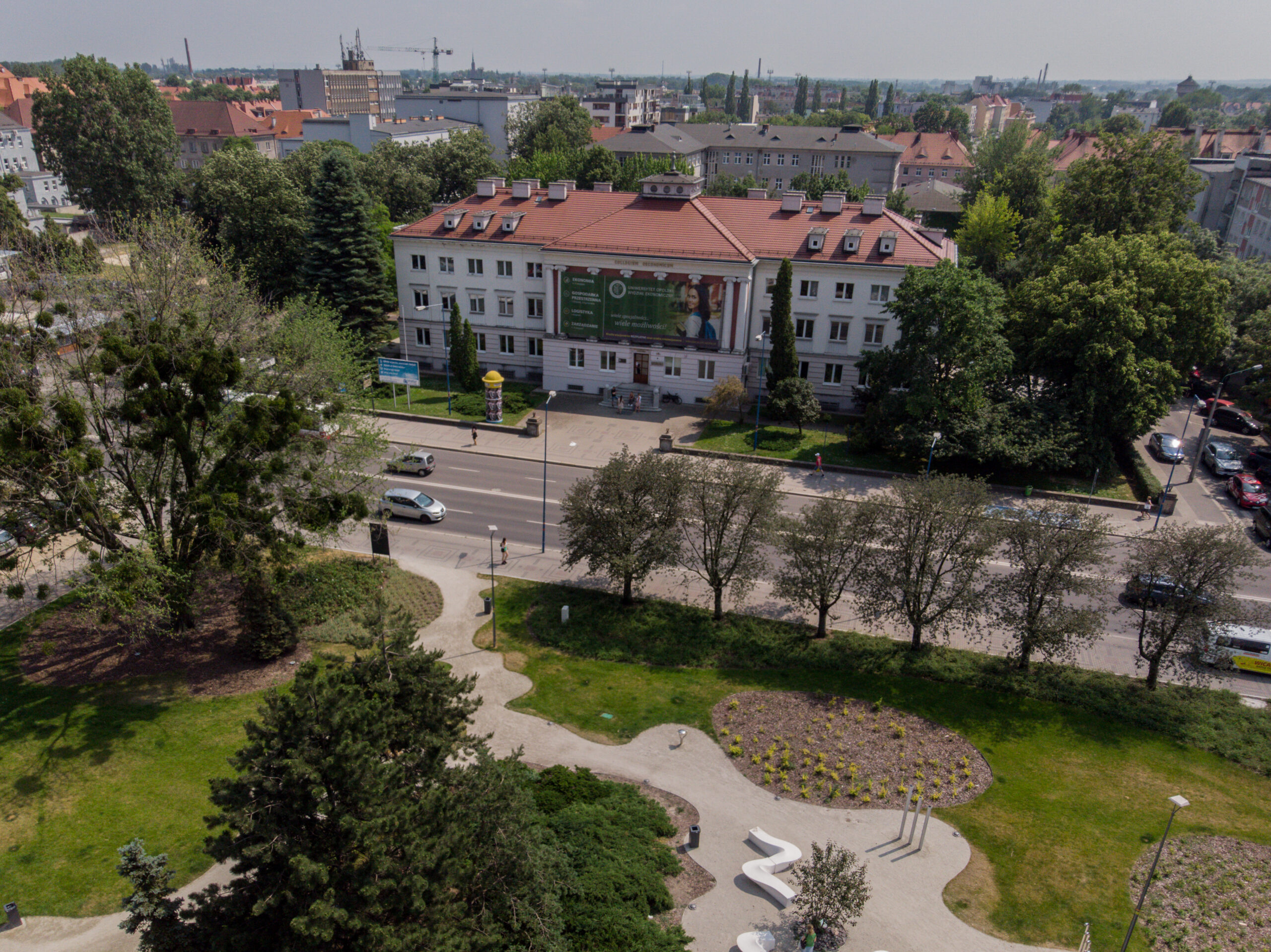
The Faculty of Economics at the University of Opole was established in 1992, but our university has been educating economists for over 30 years. During this time, a strong, competent team of lecturers has been established, specializing in various areas of economic knowledge, such as economic theory, marketing and logistics, finance and accounting, economic and social policy, regional policy, economic geography, and spatial planning.
In inviting high school graduates to study at the Faculty of Economics, it’s important to emphasize that graduates of our programs have found attractive, educationally relevant jobs not only in Opole and the Opole region, but also in Poland and abroad. They are active in local government at various levels, in organizations, social associations, and in many other significant institutions.
The scientific position of our Faculty is reflected in the right to award doctoral degrees in economics.

Study system: full-time/part-time
Study mode: first-cycle
Duration: 3 years
First-cycle modules, full-time studies:
Corporate finance
Tax consultancy
Financial markets
The “Corporate Finance” module was developed for graduates who pursue careers in the finances of entities operating in the real economy, regardless of their size and level of bureaucracy (micro, small, medium-sized, corporations, state-owned and publicly listed companies). The curriculum covers valuation, profitability, and risk measurement for businesses, financial institutions, and public sector entities. These topics are universal in nature. Graduates of this module will find employment in international and Polish enterprises, public sector entities, and financial institutions. Key thematic areas include: designing business ventures (new ventures) and investment projects, selecting and raising capital, and assessing the benefits and risks of planned activities.
Method of conducting classes: in addition to traditional teaching methods (presentations), we offer workshops, case study exercises, and project groups.
The “Tax Consulting” module is aimed at individuals who want to work in business, specifically learning how to establish and maintain books and records, perform settlements, prepare reports and declarations, utilize financial information, and conduct tax analyses.
The module focuses on specialized knowledge and practical skills in accounting, taxes, and insurance premiums, which are essential for running a business. The knowledge and skills are consistent with Polish and EU accounting and tax regulations, making them essential for running any business.
Graduates of this module will have knowledge of establishing and maintaining tax records, determining tax and insurance obligations, and determining the amount of public law liabilities. Based on the knowledge acquired, students will gain skills in recordkeeping, settlement, and preparation of financial statements, tax and insurance declarations. Practical skills include conducting settlement procedures and reporting using specialized financial and accounting software and web applications.
“Financial markets” module. The curriculum for this module covers subjects related to the broadly defined financial market, providing graduates with comprehensive, practical knowledge. The curriculum encompasses two main areas of knowledge. The first describes and analyzes various segments of the financial market and the financial instruments within them, divided into the money market, the capital market, the derivatives market, and the foreign exchange market. The second area provides a detailed description of institutions operating in the financial market. These institutions include commercial banks, investment banks, insurance companies, investment funds, pension funds, brokerage houses, and investment management institutions. The curriculum is based on global standards and focuses on financial market analysis and risk analysis.
An additional advantage of the course and module is the emphasis on practical issues, which means that graduates of this course have no problems in obtaining employment in enterprises and financial institutions, especially in global international corporations.
Absolwent studiów I stopnia kierunku Finanse i rachunkowość posiada wiedzę z zakresu finansów i rachunkowości, funkcjonowania instytucji finansowych i banków oraz umiejętności analizy podstawowych zjawisk gospodarczych i sytuacji ekonomiczno-finansowych jednostek gospodarczych.
Graduates of this program understand the causes and effects of economic phenomena at the macro- and microeconomic levels in an open market economy. They are also able to locate and analyze source materials in the fields of finance and accounting.

During the studies, the student will become familiar with the basics of economic knowledge and related sciences covering issues in the field of: microeconomics and macroeconomics, international economic relations, social and economic policy, finance and accounting, management, economic analysis, law, mathematics, information technology, statistics, econometrics, as well as specialization and optional subjects.
They will also have the opportunity to detail and deepen their knowledge by choosing the specializations offered in the field of Economics.
Students have the opportunity to acquire and develop their economic knowledge and obtain the EBC*L certificate at the Accredited Examination Center at our Faculty. The international certificate of economic skills, or the European Certificate of Business Competence, certifies practical economic knowledge and is recognized in most European countries.

Studying Logistics – a practical field of study combines theory and practice, where you gain knowledge and practical skills in one of the most important disciplines in contemporary economics and management sciences, which is also one of the most dynamically developing economic sectors on an international scale.
During the studies, knowledge is provided in the areas of logistics management in manufacturing, trade, and service enterprises, controlling the flow of goods and information, supply chain operation, systems engineering and analysis, marketing, production and service management, logistics infrastructure, quality management, and process design. Students also gain adequate preparation for the logistics profession through carefully designed and presented curriculum in core subjects – mathematics, statistics, economics, management, finance and accounting, and law.
Through compulsory and elective courses, students will acquire theoretical knowledge in logistics as well as a practical approach to the issues they learn. This program is a practical-oriented program, meaning that some of the classes are conducted through internships in various business entities. Studies are offered on a full-time and part-time basis, culminating in a bachelor’s degree.
 Management is one of the most open, interdisciplinary fields of study with a very broad range of topics. It is a unique field that allows students to naturally identify their own interests and utilize their individual creativity.
From the perspective of increasing job opportunities, Management at WE UO is the best place to find active, responsible, and committed individuals who choose their own career path. Key roles are assigned to teamwork, communication, and social capital and time management skills, which are required in every organization and position. The high level of competencies acquired and honed in the Management program will enable effective management in manufacturing and service enterprises, public sector entities, and social organizations.
During their studies, students become familiar with the field of management sciences, with particular emphasis on organizational and management theory, including quality management and human resources management. At the same time, they acquire fundamental knowledge in microeconomics, macroeconomics, corporate finance, accounting, economic law, finance and accounting, and law. As preparation for decision-making, students acquire skills in methods and techniques for analyzing business situations (statistics, econometrics and mathematics, information technology).
Students have the opportunity to acquire and develop their economic knowledge and obtain the EBC*L certificate at our Faculty’s Accredited Examination Center. The international certificate of economic skills, or European Certificate of Business Competence, certifies practical economic knowledge and is recognized in most European countries. Furthermore, students can take advantage of the Faculty of Economics’ extensive international cooperation opportunities (Erasmus+, BIP, and the Kosovo Summer School). This allows them, in addition to improving their foreign language skills, to expand their skills not only in an international environment but also in a more engaging way.
The practical-oriented undergraduate Management program will equip students with high-level competencies sought after in the job market. Extensive use of innovative teaching methods (case studies, projects, gamification, simulations, fieldwork, certifications) and student engagement make the learning process more engaging and allow students to acquire practical qualifications, crucial to employers. The curriculum provides students with the opportunity to develop competencies and creativity. The use of modern teaching methods also positively impacts employee qualifications, stimulating them to develop innovative attitudes. Classes will be enriched through study visits and direct contact with business practice.